



































































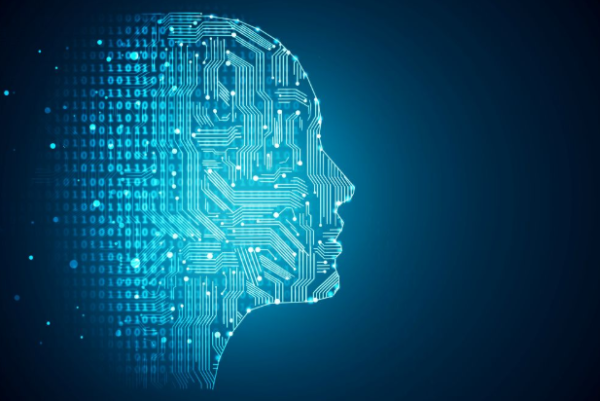
Is AI going to take our jobs? Well, first, let’s understand what AI is. Whether you realize it or not, you use AI in your everyday life; it’s in our navigation systems, personal recommendations on apps, personal assistance, and your spam filters in emails. AI stands for Artificial Intelligence, a technology that lets computers and other machines emulate human characteristics, such as how we learn, make decisions, be creative, comprehend, and solve problems, through computer science. AI also draws on other disciplines, such as data analysis and statistics, hard and soft wear engineering, and heroscience, along with philosophy and psychology.
AI is still a field of computer science, intending to create smart machines that can perform tasks that usually require human intelligence. AI is learning from vast amounts of data. This is how they teach machine learning by showing them millions of examples and data instead of writing hundreds of rules into their programs. An example of this is OCR (optional character recognition), which is when they pull data and text from many images and or documents. Through this, they can analyze and identify patterns and look through them to make predictions without having to put everything explicitly programmed into the computer, ready for anything. With this, AI can do things that our brains can do; they can understand what’s going on in the world around them, learn and come up with new ideas, letting them identify relationships and patterns in data that humans could/did miss when we did the task.
AI is a broad field of technology that encompasses machine learning (ML), Deep Learning (DL), Natural Language Processing (NLP), and Computer Vision (CV). ML is where AI systems learn from data to identify different patterns to make decisions without having to be programmed for that problem. It’s teaching a computer by showing it hundreds of pictures so it can learn on its own. DL is a subfield of ML, but it uses artificial neural networks with different layers (which is why it’s called deep learning), so it can learn from the data collected. The networks are modeled after the human brain. So they can do well at tasks like image and screen recognition. NLP lets computers interpret, understand, and generate human language. NLPs are what power voice assistants similar to Siri and Alexa, along with chatbots and translation services. Lastly, CV lets computers interpret and “see” visual information from the world (this could be things like videos or images), and you also see this in everyday life through facial recognition, to self-driving cars.
Since AI has such broad fields and ranges of things it can do/interpret, it lets people use it for so many different reasons that could benefit them or just make their lives easier. AI can perform some of the same tasks as humans, which means certain roles may have higher risks of being replaced by AI. Many emphasize that automation can do the boring day-to-day tasks that you don’t want to do, freeing you up for more important/fun work. We have already been seeing this happen, like companies abstaining from hiring for these entry-level positions that AI is able to do. Although AI can do many things, AI robots can’t really replicate all human qualities, like social skills, emotional intelligence, and interpersonal relationships. Another field that is safer from getting replaced by AI is fields that require more creative ideas/minds, along with a less rigid routine of work. Overall, I think that we will see a lot more of AI, but I don’t know about it taking over the world or even all of our jobs. I do think that if we rely on AI too much, it could cause us to suffer in the long run.