





























































History
Clowns have been a staple in rich communities for many centuries. Entertainment for the rich, but also to humiliate the poor and several minorities. That being said, many of the greatest and strongest countries in the world have kept some variety of clowns all throughout history. The first reported use of the word “clown” was in a Shakespeare play, which is unsurprising, as he has made many words that we still use today.
- Ancient Egypt
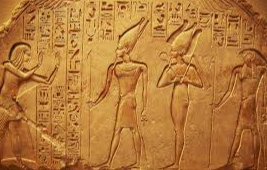
While in the time period, it was common for powerful people to keep slaves, about 50,000 years ago, the Egyptians would take it a step further. They would have African enslaved people dress in animal skins and dance around like the Egyptian Gods to entertain the Pharaohs. These people were known as Dangas, and this would be their only purpose in the Royal Courts.
- Ancient China
The Chinese Zhou Dynasty, way back in 1046-256 BC, also had figures with the same purpose as a clown. There is one specific “clown” that sticks out in the history of the time. During the reign of Emperor Ch’in Shin Huang-ti, the Great Wall of China was built. This emperor kept a court jester, much like the Egyptian Pharaohs would. This clown’s name was Yu-Zhe, who would do something unthinkable at the time. Emperor Ch’in Shin Huang-ti directed the building of the Great Wall of China, which was a highly divisive decision for all of China at the time. But what irritated the citizens even further was the fact that the Emperor wanted to add a white and shiny paint coat over the entirety of the wall. This would have caused many more deaths and wasted so many important resources. It was highly frowned upon to openly disagree with the Emperor as he could quickly put them to death. But Yu-Zhe bravely (or somewhat stupidly) drew a photo of a penis on the wall with the paint that the emperor wanted to someday cover the entirety of the wall. Yu-Zhe was later whipped for his act of rebellion, but the word spread nonetheless, and the outrage soon reached Emperor Ch’in Shin Huang-ti. He decided that the wall would be fine even if it was left unpainted after all.
- Ancient Greece
Greece’s version of a clown had a specific attire, specific to them. They would wear long shirts, known as chiton, with the front and back heavily padded. They would wear long socks that look much like modern tights. They were often bald and were humorously dramatic. These “clowns” are not as we think of them in modern times; they are normally a more clumsy or comedic character to break the tension in Greek theater.
- Ancient Rome
The Romans had many different types of clowns: the Sannio, the Stupidus, the Scurra, the Moriones, the Stulti, and the Fatui. The Sannio were much like the more well-known mimes of France. These types of clowns were well known for their dramatized facial expressions and body contortions. It’s also worth mentioning that these were one of the few clowns from this period that did not wear a mask. The next clown, the Stupidus (much like the English word ‘stupid’), was normally bald, wore colorful outfits, and pointed hats. This may have been where the design for many modern jesters came from. The role of these clowns was to comedically mimic the more serious actors, providing comedic relief to the audience. He would have many riddles and innuendos, and would often start mock fights with the other actors. There were also “lower” clowns, who were disabled, either physically or mentally. The Scurra were the clowns who had physical differences, but were not totally disabled. The Mariones were the mentally disabled clowns, while the Stulti and the Fatui were the physically disabled. While some of the “higher” clowns would be almost respected, these “lower” clowns would be ridiculed and humiliated.
- Turkey
Similar to Ancient China, Turkey also had a famous clown. In the 1440s, the clown, Nasr el-Din, was the subject of many tall tales and became somewhat of a folk hero. While there are many stories about him, “An Eastern Chequerboard” by Sir Harry Luke is a good overview of his many conquests. Nasr was also known for his pranks and cunning humor.
- England and Scotland
It was extremely uncommon for the average citizen to know how to read or write, so it was usual for the court jesters to speak for the common folk. Since they were close to the royalty, this made them both friend and foe to the greater court. There are many well-known jesters from both England and Scotland, but it’s reported that most were relatively well-liked by both their employers and the general public.
- Italy
Clowns were soon transported to Italian culture, but it was known as “Italian Commedia del’arte al improviso (professional improvised comedy).” This was just the origin of modern comedy. Italian clownery also introduced the world to “slapstick” humor. One of the famous actors would carry around a bat that he would smack against his hand, hence the name. Now it is very common for clowns/clownish figures to use physical humor/dramatic clumsiness.
- France
Moving on to France, it was clear that they had a different idea of clowns and how they should be portrayed. The Pierrot clown was the face of great distress and melancholy. The Pierrot clown is often portrayed as a mime in modern day, as the Pierrot character would often mimic others in a dramatic and silent manner. While in most other cultures, clowns were simply a character used for entertainment, the Pierrot became an art style. Pierrot, the lovesick clown, had many “decorative trinkets” based on the character. They became somewhat of a luxury good for the French and even spread to other countries.
Conclusion
While there are some forms of clown in many other countries, these are just the most influential that I could find. Through my research, you can clearly see the ties to modern clowning and even some humor vocabulary that we use in current comedy. Clowns were not only the earliest form of comedy entertainment, but also the beginning of self-expression.