






































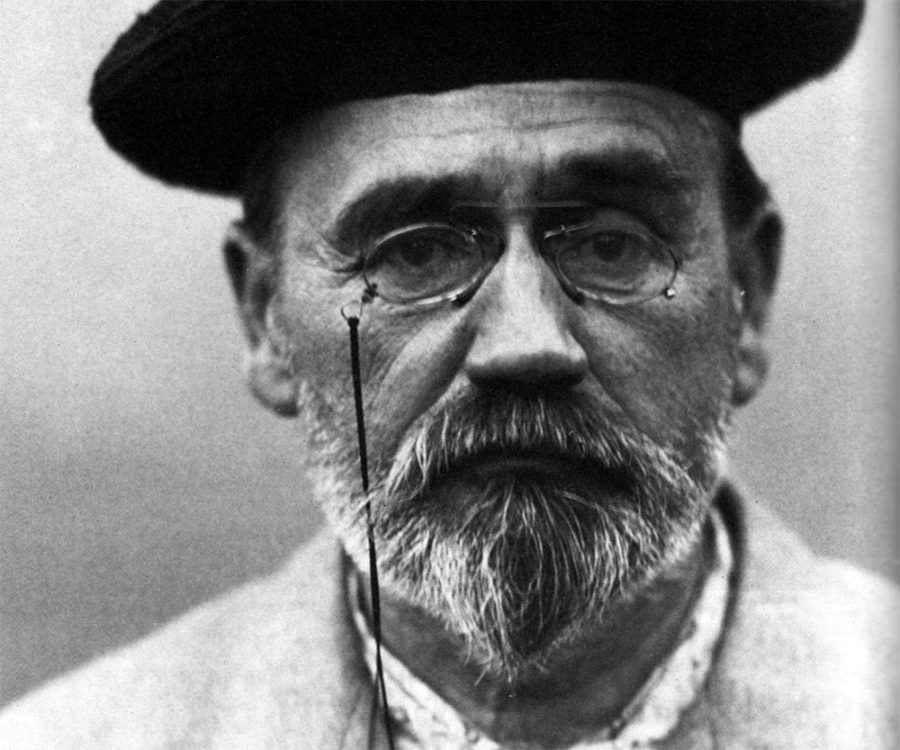































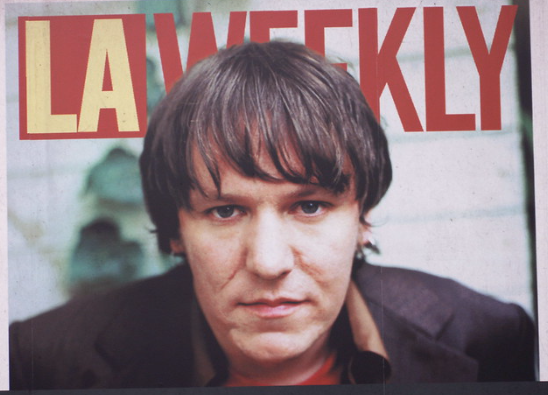
Steven Paul Smith, known famously as Elliott Smith, was born on August 6th, 1969, in Omaha, Nebraska. His parents, Gary Smith and Bunny Kay Berryman, divorced when Elliott was only six months old. Due to his parents’ separation, he moved in with his mom in Duncanville, Texas, where he spent most of his childhood. His childhood was very bleak with his stepfather, Charlie Welsh, frequently abusing Elliott at a young age. Smith alleged that Charlie had sexually abused him, but Welsh has since denied those claims. Because of this, he experienced symptoms of intense depression that carried into his adult life. Smith grew up with 2 stepsiblings while living in Duncanville– Ashley Welsh and Darren Welsh. At a young age, Smith grew afraid of religion. His family was an attendee of the Community of Christ and later attended a Methodist church. Because of their views, Smith’s beliefs warped. Smith began to learn various instruments during his childhood. At nine, he learned to play piano. A year later, he composed his first piano piece, “Fantasy”, earning him an award at an arts festival in Duncanville. That same year, Smith learned to play the guitar, deeply inspired by flamenco music and The Beatles.
When he was 14, Smith moved to Portland, Oregon, with his father. Smith began smoking marijuana and drinking recreationally, which eventually marked the beginning of his drug abuse journey. During this time, Smith continued to experiment with music, using a four-track recorder to record his first song. Smith attended Lincoln High School in Portland, where he played clarinet, guitar, and piano in an ensemble. Smith sang in the bands Stranger than Fiction and A Murder of Crows, going as Steven Smith or Johnny Panic. Smith graduated from Lincoln High School as a National Merit Scholar in 1987. After graduating, Smith attended Hampshire College in Amherst, Massachusetts. By this time, he had legally changed his name to Elliott because he claimed that “Steven” sounded “too bookish”. At Hampshire, Elliott bonded with his classmate Neil Gust. Together, they formed the band Heatmiser, where Smith served as the lead vocalist. In 1991, Smith graduated with a bachelor’s in philosophy and political science. Shortly after graduation, Smith moved back to Portland alongside Gust, where they continued to play as Heatmiser.
Heatmiser added Tony Lash and Brandt Peterson to the band, who were Smith’s friends in high school, after Smith and Gust moved to Portland. At the time, the band stood out amongst Portland’s rock scene. Heatmiser never fit into the “grunge” label that was extremely popular at the time, which stuck out like a sore thumb in the ’90s alternative culture. The band released 3 albums between 1993 and 1996: Dead Air, Cop and Speeder, and Mic City Sons. During Heatmiser’s prime, Smith began a solo career under the name Elliott Smith. In 1994, Smith released Roman Candle. This album was extremely successful, prompting him to pursue a solo career full-time. Due to this, Heatmiser struggled to stay afloat and broke up in 1996 during the recording of Mic City Sons. On his own, Smith captured a raw, sincere tone that no other had ever been able to before.
In 1995, Smith released his self-titled album. The project was incredibly well received. This album dealt with hard-hitting topics like depression and drug abuse, which Smith had dealt with previously. Famously, the single “Needle in the Hay” was featured in Wes Anderson’s 2001 film The Royal Tenenbaums; however, Smith did not like the way it was used in the movie. In 1997, Smith released his third studio album, Either/Or. Smith released two singles to promote its release, with “Speed Trials” releasing before the album’s release and “Ballad of Big Nothing” releasing after. The album gained Smith exponential popularity among alternative and folk culture, with the song “Miss Misery” being featured in Gus Van Sant’s 1997 film Good Will Hunting. The song was nominated for Best Original Song at the 1998 Academy Awards ceremony, but did not receive the award. Amidst Smith’s growing fame, he began to indulge in alcohol abuse and severe drug use. Following the release of Either/Or, Smith moved from Portland to Jersey City to New Jersey, then finally landed in Brooklyn, New York.
After the success of his previous album, Smith was signed to DreamWorks Records. During the production of his fourth album XO, Smith fell into a deep depression. He openly admitted to attempting to take his own life while inebriated by jumping off a cliff. XO was released in 1998 to critical acclaim, releasing with the hit single “Waltz #2 (XO).” Smith took the initiative to emerge into mainstream media, appearing on late-night shows like Saturday Night Live and Late Night with Conan O’Brien.
Elliott moved from Brooklyn to Los Angeles, where he released his final album, Figure 8, on April 18th, 2000. Figure 8 is regarded as Smith’s magnum opus and one of his best albums. Unfortunately, Smith’s addiction worsened after the album was released. His drug abuse gave him intense paranoia, in which he believed the employees of DreamWorks Records were following him. Smith began to stop taking care of himself, eating nothing but ice cream for weeks. In 2003, on his 34th birthday, he gave up alcohol. This step encouraged him to give up drugs, but ultimately failed during the rehabilitation process. During his sobriety, Smith began to record his fifth album, From a Basement on the Hill, but it was cut short due to his death.
On the morning of October 21st, 2003, Smith and his girlfriend, Jennifer Chiba, were arguing in his Los Angeles apartment. After the argument, Chiba went to the bathroom to shower, where she heard Smith scream from the bedroom. Chiba found Smith standing in front of the door with a knife in his chest. Smith was rushed to the hospital after Chiba called 911, but was pronounced dead later that afternoon at 1:36 pm. During the investigation, a suicide note was found in his apartment, reading, “I’m so sorry– Love, Elliott. God forgive me.” Along with this, no illegal substances were found in his body. However, an increased amount of his ADHD stimulants, antidepressants, and anxiolytics were found by the coroner. His death was interpreted as a suicide; however, the autopsy report was unable to determine if his death was a homicide.
Elliott Smith has left a significant impact on alternative culture. After his death, From a Basement on the Hill and New Moon were released posthumously. Smith’s legacy has been carried on by fans and fellow musicians alike. The mural on Figure 8’s album cover has been adopted by fans and has been frequently restored in his honor. After death, Smith has continued to inspire others, with popular artists such as Frank Ocean, Billie Eilish, and Madonna crediting him as an influential figure in their lives. Even 22 years after his death, Smith has left an exemplary stamp on indie music throughout his tragic life.